The architecture

Tiller Intelligence is the architecture your business runs on.

  • Locked where it matters. Records, signatures and retention live in the architecture, not in habit.
  • Open everywhere else. The plan you are buying into is that you extend it yourself, with your own AI, on your own data. The edge is being built now and nothing above the line is fixed.
  • Never stuck alone. When you hit the edge of what you should do yourself, you call us.

We control the deployment. Nothing reaches your workspace without us putting it there. Running today at our own store.

Open · yours to build
Walk-in cooler alertyou, 6 wks ago
HVAC amp-draw alertyou, last night
Weekly labor reportyour Claude
Driver cash screenyour Claude
+ whatever's nextanything is possible
Risk guards every extension is designed to be checked before it runs · we control the deployment
Being built
Locked · cannot be edited away
Point of saletickets · drawer · tax · margin
Records & compliancesignatures · retention · audit trail
Tenant boundary · access control · reporting
What a refusal looks like: an extension that would let a signed inventory count be edited after the fact, blocked with the reason, before it runs.
The grounding framework

Cash, stock, hours and margin. That's the job before it's anything else.

A retail day comes down to a handful of numbers: what's in the drawer, what's on the shelf, what the day cost in hours, and what's left after both. That is the job at our counter, and it is where Tiller starts. Point of sale is the first framework because it's where those numbers get made.
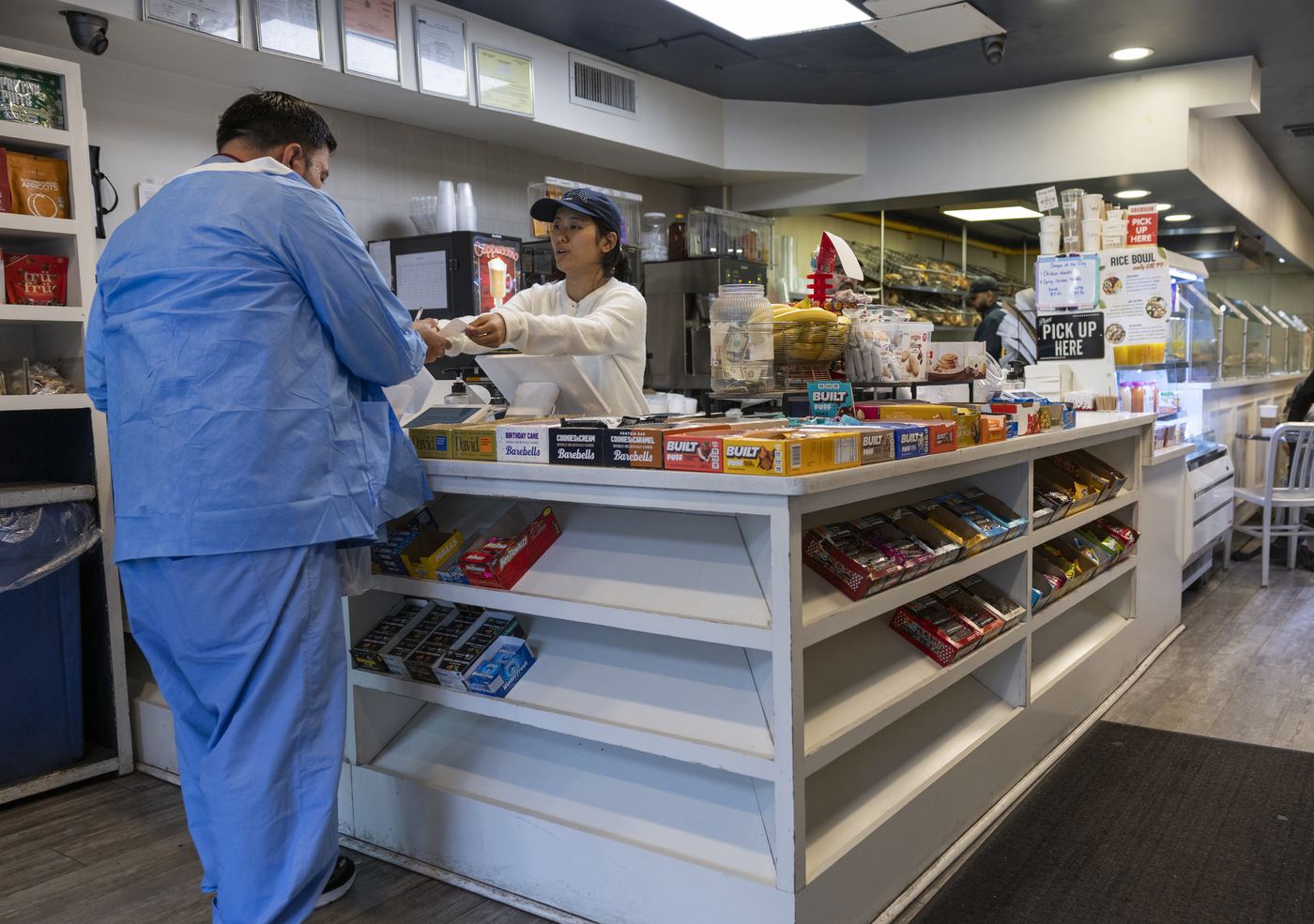
A cashier hands a customer their receipt at a retail counter

Photo: Tessa Bury, Wikimedia Commons, licensed CC BY 4.0.

  • Cash. Counted twice, reconciled to the cent, variance on the screen before the drawer locks.
  • Stock. Days of cover tracked live, reordered before the shelf goes empty.
  • Hours. What the day cost in labor is the number we don't hold yet. It's the next one we want.
  • Margin. By brand and by category, live, not at month end.
The frameworks

Point of sale first. More plug in behind it.

Same records underneath, same guards, same login. Every framework you turn on runs on the one architecture, not a separate app bolted beside it.

Ticket #4,182 · Dez R.open
Cold brew, 16oz$4.75
Trail mix, family size$8.50
Member discount 15%−$1.99
Due$11.26
Drawer variance today$0.00
Retail counter

Point of sale

Sell, discount, reconcile the drawer to the cent. Built at a counter that does real volume, by the people standing at it.

  • Cash counted twice, variance on the screen
  • Every line the day's reporting needs, written as the sale happens
  • Margin by brand and by type, live
  • Works with the internet down
Live · our storeOpen framework
Batch AG-0114 · Week 3in band
Requirement coverage147 / 152
5 open2 unsigned
Pest scouting · Room 3overdue 2d
Water test · wellsigned
Cultivation record

Agricultural compliance (GACP)

Good Agricultural and Collection Practices, the broad agricultural standard for herbal and botanical crops, turned into daily work: who does a task, when it's due, who signed, and what's missing right now.

  • Every requirement mapped to a record you actually keep
  • Batch identity from planting to transfer
  • Unsigned and overdue tasks surfaced, not buried
  • Audit pack exported with the evidence attached
In buildOpen framework
Run 14 · Marcus T.en route
6 stops · 2 doneETA 3:42p
Stop 3 · 1412 RedondoID ok
Stop 4 · 88 Ocean Aveno answer
Manifest value on van$2,910
Cash carried$1,145 limit 3k
On the road

Delivery

Manifest, route, ID check, cash on the van and the drop signature, the whole run, on the driver's phone, reconciled when he walks back in.

  • Manifest value and cash limit watched live
  • ID and age check captured at the door
  • Route re-cut when a stop goes bad
  • Driver reconciles in under two minutes
Built, not switched onOpen framework
Your brand at our store
Units out, 7 days318
Sell-through74%
Days of cover9
Needs you
Compliance doc · Trail Mixexpired
House Blend Coffeelow, 2d
Invoice 2281paid
For the brands on your shelf

Brand portal

Your vendors log in and see their own sell-through, their own stock cover and their own expired paperwork, and fix it without calling your buyer.

  • Each brand sees only its own numbers
  • Expired paperwork flagged to the brand, not to you
  • Reorder before the shelf goes empty
  • Invoices and credits in one place
Not built yetOpen framework
Buy one, get everything

There's nothing you don't get.

You're not buying a bundle of separate apps. You're buying the architecture, and every framework we build plugs into the one you bought. The choosing isn't which ones you paid for. It's which ones you turn on.

Locked and open

The parts that can put you out of business are not yours to change.

Every install starts from the same locked layer: records, signatures, retention, tenant boundary. You build on top of it. You never build through it. That is the whole reason it is safe to hand you the keys.

Locked

Requirements behind the guards

The record shape, the signature chain and the retention clock are written into the architecture and enforced by the guard layer. An extension that would break one is designed to be refused, with the reason, before it runs. That layer is being built now.

Read the guard rules
Locked

What we hold the line on

Signature chains, record retention, the tenant boundary, and every tax and compliance report the software owes your state. These don't move because someone finds them inconvenient. They move when the law does.

See what's locked
Open

What's yours to shape

Screens, alert rules, reports, integrations, workflow and wording. Anything that isn't one of the parts above is yours to build, break and rebuild without asking us first.

See what's open

Locked, we hold this line

no edits
Signature chain and record retentionarchitecture
Tenant boundary and access controlarchitecture
Tax reporting and calculationlaw, your jurisdiction, one regime today
Cash drawer reconciliationarchitecture

Open, build what you want

yours
New screens, forms and reportsyour Claude
New readings and new sensorsyour Claude
Your own alert rules and holdsyou
Integrations into anything you runyou or us
Workflow, wording, crew tasksyou
You extend it

Your own AI. Your own data. Your own infrastructure.

Above the locked line, the architecture is yours to build on. New screens, new alerts, new reports, new connections into whatever you already run, described in plain language, checked by the guards, shipped when it clears them.

Yours

Your own Claude account

Your account, your keys, your data boundary. It reads your store, writes your extensions, and answers your crew in your own words. Your prompts and your records never cross into another tenant, and nothing about your business trains anything outside your walls.

How tenancy works
Open

Extend it yourself

New screens, new readings, new alerts, new reports, described in plain language, built against the same API we build on. No vendor ticket, no six-week roadmap slot, no charge per field. If it clears the guards, it ships.

See the extension API
The resident expert

Someone who knows your store is on shift every hour you're not.

Not a chatbot bolted onto a dashboard. It has your equipment history, your procedures, your crew and your rules, so it can walk a new hire through a job, and it knows when a job is past what it should handle alone.

It answers in your words

"The cooler in aisle 3 is running warm," not "unit 14, delta-T anomaly, sigma 2.4." Your crew's own words are the interface. That's a rule in the design, not a preference.

It walks people through it

New hire, first night alone, first time resetting the card reader: step, photo, confirm, next step. The walkthrough is written for your equipment, not a manual PDF.

It knows its own edge

When the evidence runs out, or the job is past what your crew should do unsupervised, it says so plainly and opens a service call. It does not guess to look useful.

Then you call us

A named engineer with your whole timeline already in front of them: every alert, every reading, every change you made. The call starts at the problem, not at "can you describe the issue."

What plugs in

It knows the cooler compressor is dying before the aisle does.

Your building already produces the evidence: temperature, amp draw, run time, valve position, humidity, power. Nobody reads all of it every night. The resident expert in your workspace does, and it tells you what it found in the same words you'd use.

Today, store systems

Example store · 4 systems · 61 connected points
1 act today2 watch58 normal

The walk-in cooler compressor is running toward a failure. Get a tech on it today.

Cabinet temperature has held 2.1°F above setpoint for nine consecutive nights while the compressor drew 18% more current than its own four-week average. That is the same pattern the old unit made for eleven nights before it seized in March. Perishables are on that line today, so a dead unit here costs the inventory, not just a weekend.
First seen 9 nights ago · confidence high, matched against your own failure · maintenance log attached
Open work order
Call Tiller

Backroom humidity started climbing the same night the cooler drifted. These are one problem.

You added the backroom humidity sensor six weeks ago. Since then the overnight reading has tracked the compressor's temperature almost exactly, up to 68% from a 40% baseline. Read together, the door seal is failing and the unit is working harder to hold temperature. Check the seal first; if the draw doesn't come back down, the compressor is the problem and not the seal.
New sensor, folded into reasoning automatically · no rule was written for this · 6 weeks of history
See the two lines

Zone 4 is reading 3°F warmer than the rest of the floor.

Nine days of drift, all in one direction, only in zone 4. The other three zones are flat, so this is the zone's damper, not the rooftop unit. Nobody noticed, because the floor still feels fine near the registers.
From your building system · last calibration 71 days ago · maintenance log
Schedule calibration

Tomorrow's price-change batch is held until zone 4 is back in range.

Your own rule: no batch job pushed from a register in a zone reading out of setpoint, so a bad thermostat doesn't also corrupt the update. It's held, not cancelled, and the crew has been told why on their tablets. Release it yourself once the tech signs off, or it releases on its own when the zone reads normal for 24 hours.
Rule you wrote on 14 Aug · applies to all four zones · held 08:10
Review hold

Everything else read normal overnight. Nothing needs you in the other three zones.

58 points checked between 20:00 and 06:00, all inside their own learned band. The empty version of this screen is the good one.
Quiet night · 06:00 sweep complete
See all points

What you plug in

Building management, HVAC, refrigeration, power meters, environmental sensors, scales, door access, cameras. Read-only until you say otherwise.

What it learns

Your store's normal, not a generic one. Nine nights of a thing is only meaningful against your own four weeks, and against your own last failure, which is a comparison no vendor dashboard can make for you.

What it never does

It does not turn your equipment off, change a price, or sign a record for you. It tells you, it holds work when your own rule says hold, and it waits for a person. Acting on it is a decision you make.

What is actually running

Numbers we can show you the source of.

Ticket history migrated
62

months of ticket lines rebuilt off the point-of-sale system our own store ran before, line by line, with 48,910 customers carried across.

Legacy system, being replaced
1

The old point of sale didn't get an app bolted onto it. We're replacing it at our own store, register by register, with the store open, and we're not finished.

Owner on the hook
1

The person who writes this software runs a store on it. If it's wrong, he loses the money first.

TILLER SERVICE
The service call. When the resident expert in your workspace says "this one needs a human," it means this: a named engineer, your site, your problem, finished. No ticket queue. If you've got a problem that no one else can help with, and if you can find them.
How it starts

Four steps, not a rollout plan.

01

Stand up the architecture

Locked requirements loaded, your licence or permit type, your locations and your people set up. Day one the records and the retention are already right. What your permit type needs on top of that, we load with you.

02

Connect what you already run

Point of sale, building systems, sensors, cameras, accounting, whatever you're running today. Read-only first, write once you trust it.

03

Build on top

Ask your Claude for the screen or the alert you want. It writes it, the guards check it, you approve it, it goes live in your workspace.

04

Call us when you're stuck

Something you can't figure out, or shouldn't be doing yourself. One number, a named engineer, and a service call that ends with it working.

Pricing

Three ways to get going. Numbers not set yet.

The shape is decided; the figures aren't. We'd rather show you an honest blank than a number we'd have to take back.

Placeholder: figures pending owner ruling
Self-serve

Run the architecture

—
per site, per month · to be set
  • Locked requirements and guard layer
  • Your own Claude account
  • Every framework, turned on as you need it
  • Record retention and audit export
  • Email support, next business day
Where we'd start you
Guided build

We help you build it

—
per site, per month · to be set
  • Everything in Self-serve
  • Every framework, turned on as you need it
  • Extension API and your own screens
  • The resident expert, on your full history
  • Service calls at published rates
Managed

For regulated single-site operations

—
quoted per site · to be set
  • Everything in Guided build
  • Outside recordkeeping requirements maintained by us
  • Audit pack and inspector support
  • Named engineer, on-site service calls
Say no first

Who this is not for.

The fastest way to be believed about what we do is to be exact about what we don't. If you're on this list, we'll tell you on the first call instead of the fourth.

  • Not for multi-state operators. No cross-state compliance, no corporate hierarchy above the site.
  • Not for anyone who needs a vendor to blame. No 24/7 desk, no SLA theatre. You get a named engineer and a real answer.
  • Not for a business that wants a black box. The whole model assumes you want to extend it. If you want software you never touch, buy software you never touch.
  • Not proven at scale yet. One store, all the owner's own money. That's a system with a deadline, not a vendor with traction, and we won't dress it up as one.
Next step

Bring us your business. We'll show you what the architecture already covers and what you'd build on top.

One call, your systems on the screen, an honest list of what connects today and what doesn't.